Eco-Friendly Branded USB Drives: A Buyer’s Guide for Sustainable Corporate Gifting
At a glance
- Eco-friendly USB drives let you promote your brand while reflecting the environmental values your audience expects.
- Wood, bamboo and recycled materials replace virgin plastic.
- Durability is itself sustainable – a drive that lasts does not get binned.
- Avoid greenwashing: choose certified materials and back up your claims.
Sustainability is no longer a niche consideration in corporate procurement. It is a baseline expectation. The majority of UK businesses now factor environmental credentials into their purchasing decisions for promotional merchandise – and that includes something as seemingly small as a branded USB drive.
For marketing managers, event coordinators, and agency buyers tasked with sourcing eco-friendly branded USB drives, the challenge is not whether to go green, but how to do it without compromising on quality, branding impact, or budget. This guide covers the materials available, the certifications that matter, the branding techniques that work best on natural surfaces, and the practical considerations that determine whether a sustainable promotional USB stick delivers a genuine return on investment.
Why Eco-Friendly USB Drives Matter for UK Businesses in 2026
The shift towards green promotional products is driven by more than sentiment. Corporate social responsibility reporting requirements are tightening across the UK. The Companies Act already requires large businesses to report on environmental matters, and those requirements are filtering down to procurement policies at every level.
Clients and partners now evaluate suppliers partly on their environmental commitments. A marketing agency pitching a campaign to a FTSE 250 company will find that the sustainability of every element – including giveaway items – is scrutinised. Employees, particularly younger professionals, expect the brands they represent to act responsibly.
A branded USB drive gets kept and reused, meaning the branding impression lasts months or even years. Research consistently shows that recipients retain promotional technology products far longer than paper-based marketing materials. A USB drive sits on a desk, lives in a laptop bag, or stays on a keyring – keeping the brand visible across dozens or even hundreds of interactions. When that drive is made from sustainable materials, it sends a dual message: the company values quality and it values the environment. That combination resonates strongly with B2B audiences who are increasingly making purchasing decisions based on supplier values as much as supplier pricing.
There is also a direct procurement dimension. Many large UK organisations, local authorities, NHS trusts, and educational institutions now include sustainability criteria in their tender requirements. Supplying eco corporate gifts that can demonstrate verified environmental credentials is not merely a nice-to-have – it can determine whether a pitch succeeds or fails. For businesses competing in the public sector or pursuing contracts with sustainability-conscious corporates, eco-friendly promotional products are a commercial necessity, not an optional extra.
Understanding the Main Eco-Friendly USB Materials
Not all eco-friendly USB drives are created equal. The term covers a range of materials, each with different properties, costs, durability characteristics, and branding suitability. Understanding these differences is essential for making the right choice.
Bamboo USB Drives
Bamboo is one of the fastest-growing plants on Earth, requiring no pesticides and minimal water compared to hardwood timber. It regenerates without replanting after harvest. As a USB housing material, bamboo offers a distinctive natural aesthetic that immediately sets it apart from standard plastic drives.
Bamboo accepts laser engraving exceptionally well, producing a clean, permanent finish with natural contrast against the pale surface. The result is a subtle, premium look that appeals to corporate buyers and design-conscious brands. Bamboo drives pair particularly well with branded USB packaging made from recycled card, creating a fully sustainable presentation from outer box to inner product.
Wooden USB Drives
Wood remains the most established eco-friendly USB material on the market. Common timber choices include maple, walnut, and birch, each offering a different colour tone and grain pattern. Maple produces a light, clean finish. Walnut delivers a rich, dark aesthetic. This natural variation means every drive has a subtly unique appearance – a characteristic that is perceived as premium rather than inconsistent.
Wooden USB drives are ideal for photographers delivering client galleries, luxury brand activations, and any business wanting its promotional items to feel crafted rather than mass-produced. The tactile quality of wood – its weight, warmth, and texture – creates a sensory experience that plastic cannot replicate. When sourced from FSC-certified suppliers, wooden drives offer strong, verifiable environmental credentials.
Recycled Plastic USB Drives
Recycled USB flash drives made from post-consumer or post-industrial ABS plastic offer an eco-friendly option that closely resembles a standard drive in appearance and durability. For businesses wanting to reduce their environmental footprint without changing the look and feel of their promotional items, recycled plastic is a pragmatic choice.
These drives are available in a wide range of colours, accept pad printing and screen printing effectively, and are among the most affordable eco-friendly options. They are well suited to large-volume distributions at trade shows, conferences, and onboarding programmes where cost per unit is a primary consideration. The circular economy narrative – diverting plastic waste from landfill and giving it a second life – is a compelling story for sustainability-focused brands.
Wheat Straw USB Drives
Wheat straw is a by-product of wheat harvesting that would otherwise be discarded or burned. When processed and combined with a binding agent, it forms a durable, lightweight composite with a distinctive speckled texture and natural matte finish. These drives are biodegradable under industrial composting conditions and appeal to brands wanting to demonstrate innovation in their sustainability approach.
Branding is typically achieved through pad printing. Colour options are more limited than recycled plastic, though natural tones align well with the material’s organic appearance.
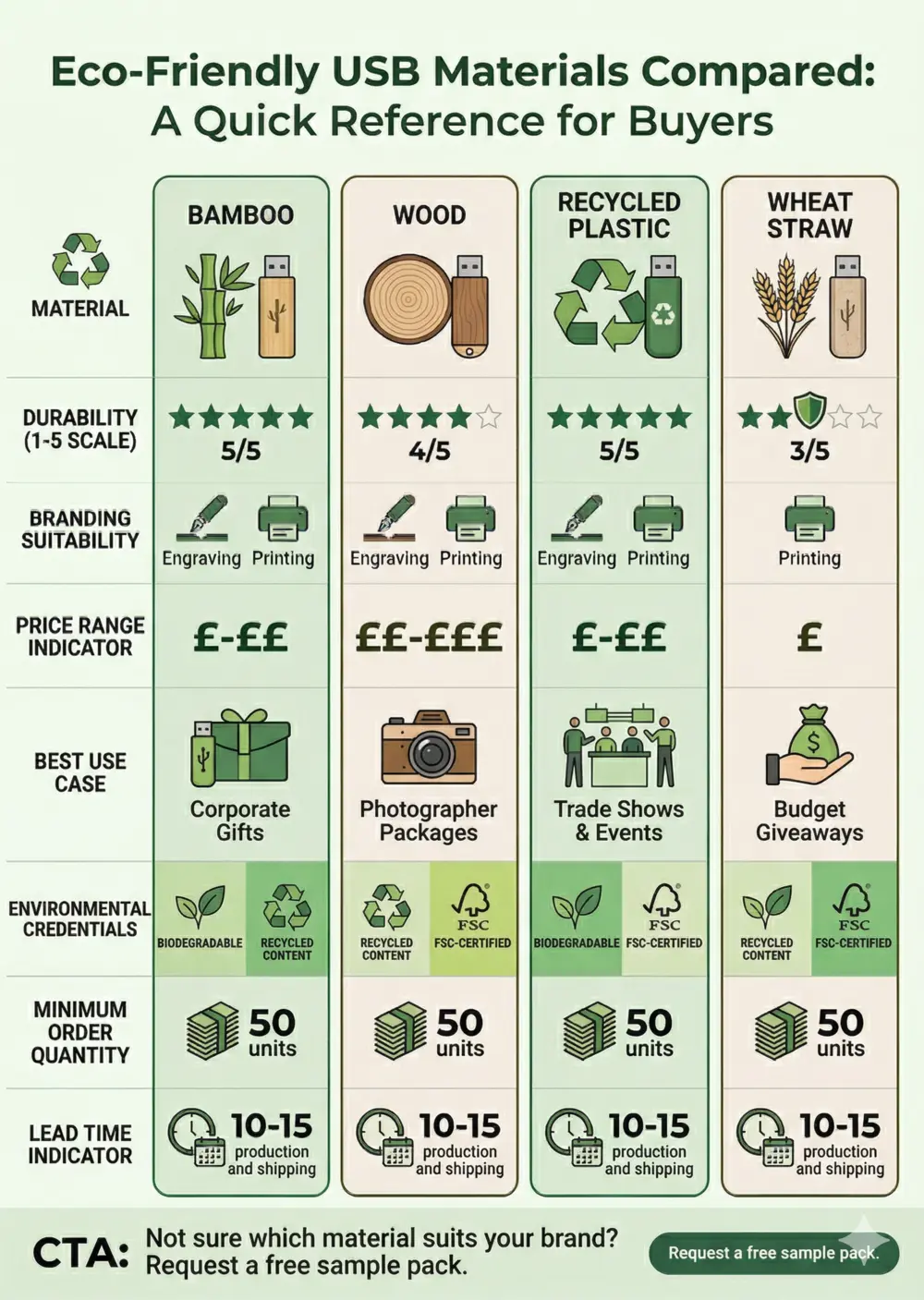
Comparing Eco-Friendly USB Materials: Which Is Right for Your Brand?
Choosing the right material depends on the use case, brand positioning, budget, and audience. A technology company distributing drives at a developer conference has different requirements from a wedding photographer packaging client deliverables.
Consider the following factors:
- Branding method: Laser engraving works best on bamboo and wood, producing a tactile, permanent finish. Recycled plastic and wheat straw are better suited to pad printing, which allows full-colour logos and finer detail.
- Perceived value: Bamboo and wood are consistently rated as more premium by recipients. They feel more like a gift than a giveaway. Recycled plastic is functional but less distinctive.
- Volume and budget: Recycled plastic offers the lowest cost per unit for large orders. Bamboo and wood carry a modest premium, typically 10 to 20 per cent more, which is justified for targeted corporate gifts.
- Environmental messaging: Wood and bamboo emphasise renewable resources. Recycled plastic highlights circular economy principles. Wheat straw focuses on agricultural by-product reuse. Choose the material whose story aligns with your brand’s sustainability positioning.
- Audience expectations: A creative agency may appreciate the originality of wheat straw. A law firm may prefer the understated elegance of walnut. A charity may prioritise the cost-effectiveness of recycled plastic.
Certifications and Standards: What to Look For
An eco-friendly claim is only as strong as the evidence behind it. In a market where greenwashing remains a genuine concern, buyers have a responsibility to verify credentials. When sourcing eco-friendly branded USB drives, the following certifications should be on your checklist:
- FSC Certification: Confirms wood products come from responsibly managed forests. This is the most recognised standard for wooden USB drives and associated packaging. FSC products carry a chain-of-custody number that can be independently verified.
- RoHS Compliance: Limits hazardous substances including lead, mercury, and cadmium in electronic equipment. All USB drives sold in the UK should be RoHS compliant.
- REACH Compliance: Addresses chemical substance safety in production, retained in UK law post-Brexit.
- Recycled Content Verification: For recycled plastic drives, confirm the recycled content percentage is third-party verified. Vague claims without documentation should be treated with caution.
- ISO 14001: Suppliers holding this certification have demonstrated a systematic approach to managing environmental impact across their operations.
A reputable supplier will be transparent about certifications and provide documentation on request. If a supplier cannot confirm material sourcing or hesitates when asked for details, that is a significant red flag.
Branding Eco-Friendly USB Drives: What Works Best
The branding method should complement the material, not fight against it. Laser engraving on bamboo or wooden USB drives produces an elegant finish that feels premium. The laser darkens the natural grain, creating contrast without inks or chemicals. This method is permanent, will not fade, and is particularly effective for minimalist logos and clean typographic designs.
Pad printing is the standard method for recycled plastic and wheat straw drives. It allows for multi-colour logos and fine detail, making it the most practical option for complex artwork. Modern eco-friendly inks further reduce the environmental impact of the process.
Screen printing offers an alternative for larger logo areas and bolder designs, producing a thicker, more tactile ink layer than pad printing.
For maximum impact, consider pairing the USB drive with custom USB packaging. A wooden drive presented in an FSC-certified recycled card box creates a cohesive, fully sustainable gift package that makes a strong impression at corporate events or as part of a direct mail campaign.
How UK Businesses Are Using Eco-Friendly USB Drives
Trade Shows and Exhibitions
Exhibitors at major UK events increasingly opt for eco-friendly giveaways to align with venue sustainability policies. Branded USB sticks preloaded with product catalogues or promotional videos offer a practical, waste-reducing alternative to printed brochures – reducing both print costs and paper waste while delivering richer content.
Photographer Client Deliverables
Wedding and portrait photographers are moving towards USB-based delivery. Wooden USB drives for photographers complement the premium aesthetic of professional photography packaging. A laser-engraved walnut drive, presented in a linen or kraft box, elevates the perceived value of the entire client experience and encourages word-of-mouth referrals.
Corporate Onboarding and Welcome Packs
HR teams use branded USB drives to deliver employee handbooks, training videos, and onboarding materials. An eco-friendly option signals organisational commitment to sustainability from day one – particularly effective for organisations with strong ESG commitments where every touchpoint should reinforce company values.
Agency Campaign Kits and Client Gifts
Marketing agencies assembling campaign kits or end-of-project deliverables for clients include USB drives loaded with brand assets, creative files, or campaign reports. An eco-friendly drive adds a tangible sustainability element, demonstrates attention to detail, and differentiates the agency from competitors defaulting to generic plastic.
Educational Institutions
Universities and colleges use branded USB drives for open day welcome packs, freshers’ week giveaways, course material distribution, and alumni engagement campaigns. Eco-friendly options are particularly relevant for institutions with visible green campus initiatives or sustainability degree programmes. A bamboo or recycled plastic drive branded with the university crest serves both a practical and promotional purpose, and aligns the institution’s merchandise with its academic values.
The Environmental Impact: Putting the Numbers in Perspective
To understand why material choice matters, consider the lifecycle of a standard plastic USB drive. Conventional ABS plastic is derived from petroleum, requires significant energy to manufacture, and takes hundreds of years to decompose in landfill. Multiply that by the thousands of promotional USB drives distributed at UK events each year, and the cumulative environmental impact becomes considerable.
Switching to eco-friendly alternatives addresses this at multiple points in the product lifecycle. Bamboo and wood are renewable resources that absorb carbon dioxide during growth. Recycled plastic diverts existing waste from landfill. Wheat straw repurposes agricultural waste that would otherwise generate emissions through burning or decomposition. None of these materials eliminate environmental impact entirely – manufacturing and shipping still consume energy – but each represents a meaningful reduction compared to virgin plastic.
For businesses reporting on Scope 3 emissions or seeking to reduce the carbon footprint of their marketing activities, switching to sustainable promotional USB sticks is a practical, measurable step that can be documented in CSR reports and communicated to stakeholders with credibility.
Cost Considerations and Minimum Orders
One of the most common misconceptions about eco-friendly USB drives is that they are significantly more expensive than standard alternatives. In reality, the price difference is modest.
Wooden and bamboo drives typically carry a premium of approximately 10 to 20 per cent over equivalent plastic models. Recycled plastic drives are generally priced on par with standard versions. Wheat straw sits in a similar range to recycled plastic, though availability can be more limited.
Suppliers offering low minimum order quantities make it possible to order from as few as 10 units, which is valuable for small businesses testing a new approach. When comparing quotes, ensure the price includes branding, any data preloading, and delivery. Hidden charges for setup fees, origination costs, or shipping can distort the true cost comparison.
It is also worth requesting a visual mock-up before committing. A mock-up allows the buyer to see how their logo will appear on the chosen material and make adjustments before production. This step is particularly important for eco-friendly materials where the branding surface may differ from standard plastic.
How to Choose the Right Supplier
Selecting the right supplier for eco-friendly branded USB drives is as important as choosing the right product. Key criteria include:
- Material transparency: The supplier should clearly identify the source and composition of eco-friendly materials and provide certification documentation on request.
- Branding quality: Request samples or visual proofs before placing a full order. Assess engraving sharpness, colour accuracy, and print durability.
- Turnaround time: Some suppliers offer express USB services with delivery in as little as 24 hours on selected models – critical for last-minute event orders.
- Colour matching: If your brand requires Pantone colour matching, confirm availability on eco-friendly models.
- Reviews and track record: Check Trustpilot and Google Reviews. Consistent positive feedback on quality, communication, and delivery reliability is a strong trust indicator.
Help & Support
Frequently Asked Questions
Yes. Bamboo, wood, and recycled plastic housings are all highly durable. The internal flash memory components are identical regardless of the outer material. A well-made wooden or bamboo drive will last just as long as a plastic equivalent.
All eco-friendly materials support professional branding. Bamboo and wood suit laser engraving, while recycled plastic and wheat straw accept pad printing and screen printing, including full-colour logos.
Eco-friendly USB drives are available from 1GB to 128GB. The most popular capacities for promotional use are 8GB, 16GB, and 32GB.
Many models are available with USB 3.0 or USB-C connectors, offering significantly faster data transfer speeds. This is particularly important for photographers and businesses distributing large files.
This varies by supplier. Some UK suppliers offer orders from as few as 10 units with full logo branding.
This depends on the supplier. FSC certification confirms wood is sourced from responsibly managed forests. Always ask for documentation if this is important for your procurement requirements.
Yes. Most suppliers offer data preloading services, allowing files such as catalogues, presentations, or videos to be loaded onto every drive before dispatch. This ensures every recipient receives a consistent, ready-to-use product.
Not always. Wooden and recycled-material drives are often priced close to their plastic equivalents, and choosing a modest capacity helps offset any difference. Simpler, reduced packaging can also bring the overall cost of a sustainable order down.
Making Sustainability a Competitive Advantage
Choosing eco-friendly branded USB drives is not simply an environmental decision. It is a strategic one. In a market where businesses are increasingly evaluated on their sustainability credentials, the choice of promotional merchandise reflects the values of the organisation distributing it.
A well-chosen, sustainably produced USB drive – branded with care, presented in eco-friendly packaging, and preloaded with relevant content – is one of the most effective promotional tools available to UK businesses today. It combines practicality, longevity, brand visibility, and environmental responsibility in a single, compact item that recipients will use repeatedly.
For businesses ready to make the switch, the first step is straightforward: request a quote from a specialist supplier, review the material and branding options, and order a sample to assess quality firsthand. The investment is modest. The impression it makes – on clients, partners, and the planet – is anything but.
Conclusion
Eco-friendly branded USB drives prove you do not have to choose between marketing effectively and marketing responsibly. By choosing natural, recycled or reusable materials – and drives built to last – you promote your brand for years while reflecting the values your audience increasingly expects. Pair certified, genuinely useful drives with recyclable packaging and honest, specific green claims, and your sustainable gifting will strengthen your brand rather than expose it to greenwashing criticism. If you would like help choosing the right eco-friendly USB drives for your corporate gifting, our team is happy to advise.